How to Start Calisthenics as a Beginner (The Right Way)
Learn how to start calisthenics from zero — the foundational exercises, how often to train, common mistakes to avoid, and exactly when to progress to harder moves.
Starting calisthenics is simple. Starting it correctly — in a way that actually builds strength rather than spinning your wheels for months — requires understanding a few principles most beginners never encounter.
The good news: calisthenics is uniquely beginner-friendly. Every exercise has an easier version that meets you where you are. You don't need to get fit before starting — the progressions take care of that.
What "Starting Calisthenics" Actually Means
Starting calisthenics correctly means starting a structured progression system — not just doing push-ups until you can do more push-ups.
The difference matters. Random bodyweight exercises produce some initial fitness gains, then plateau fast. A structured system keeps producing gains because it knows what to prescribe next: a harder variation, a higher rep target, a shorter rest period. That progression logic is what separates calisthenics as a training methodology from randomly working out.
The other thing to understand early: every exercise has a regression. Can't do a push-up? There's an incline version. Can't do a pull-up? There's a horizontal row. Can't hold a plank for 30 seconds? There's a shorter hold with proper form. No one needs to get fit before starting calisthenics — that's what the beginner phase is for.
The 4 Foundational Movement Patterns (And How to Start Each)
Every effective beginner calisthenics program is built on four fundamental movement patterns. Learn these — even in their easiest versions — and you have a complete training foundation.
1. Push (Push-up variations)
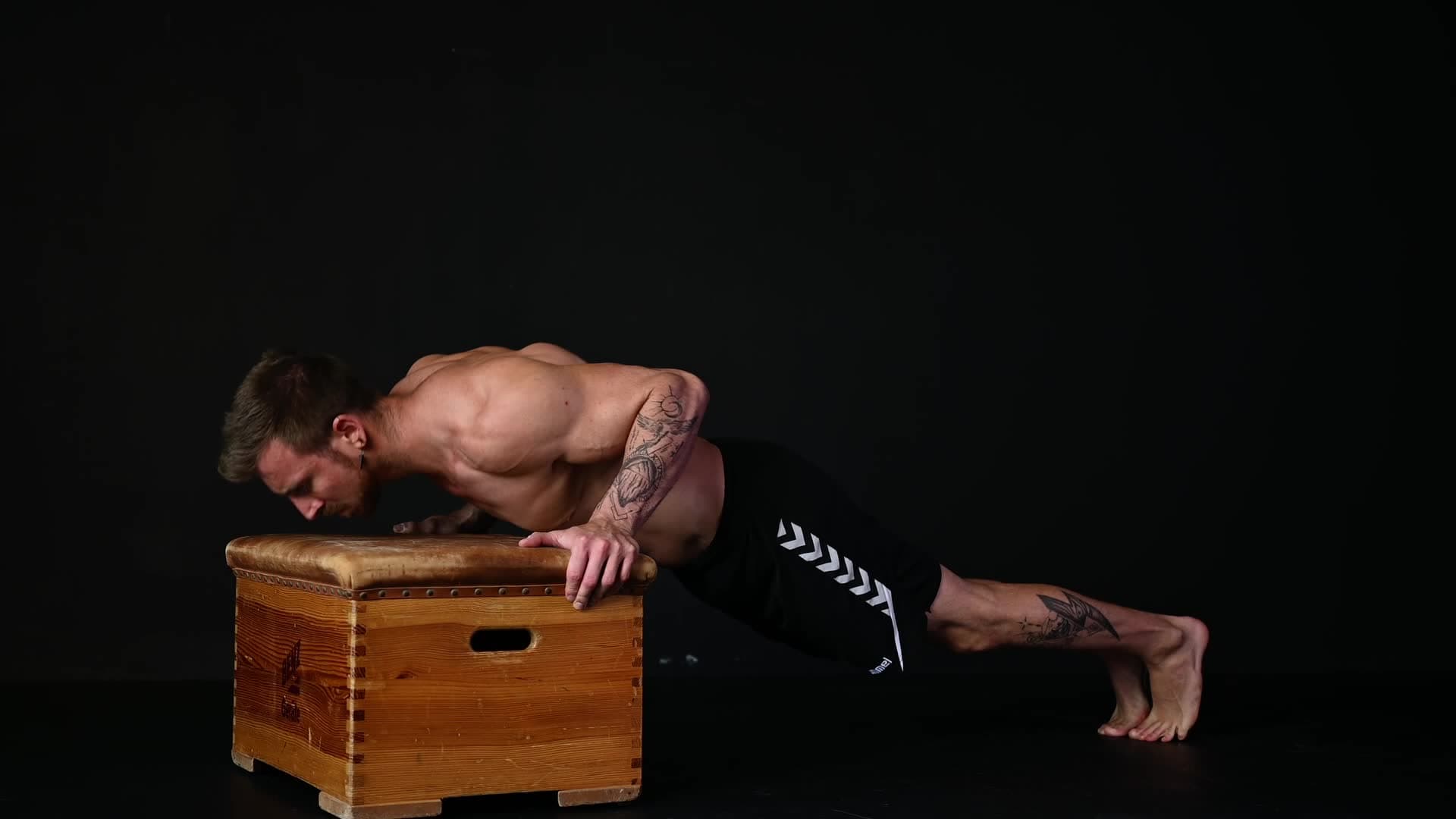
Push-ups train the chest, triceps, and anterior shoulders. If you can't do a single full push-up yet, start with incline push-ups — hands on a counter, bench, or wall. Lower the surface height as you get stronger until you're on the floor.
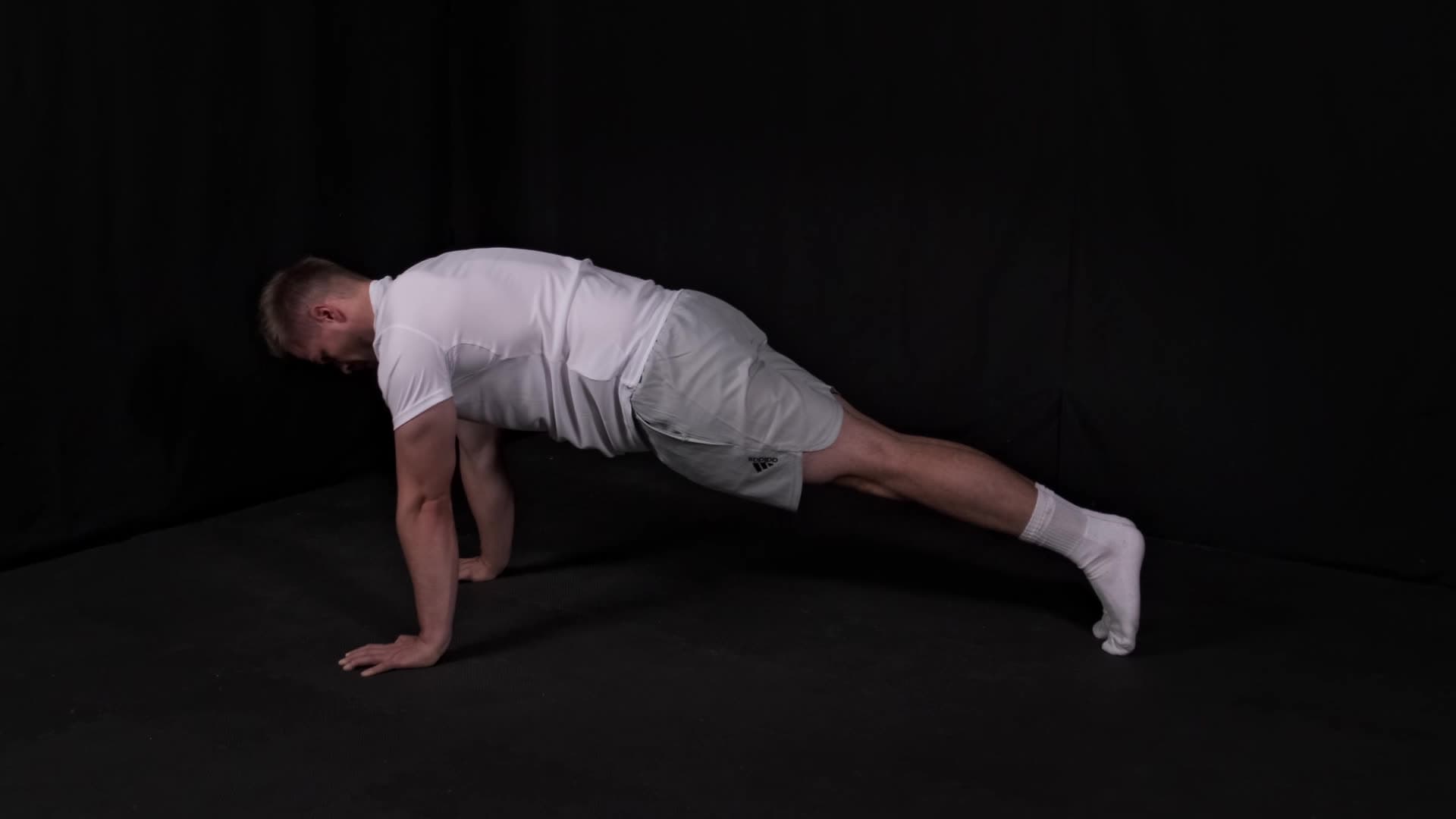
Push Up Progressions
Maintain a straight body line. Avoid the hips sinking down, or raising up too high
2. Pull (Row → Chin-up → Pull-up)
Pulling strength is the most commonly neglected foundation — and the reason most beginners never develop pull-up ability. Start with rows: lie under a desk or low bar, pull your chest to it. Progress to chin-ups (underhand grip, easier than overhand pull-ups), then full pull-ups.
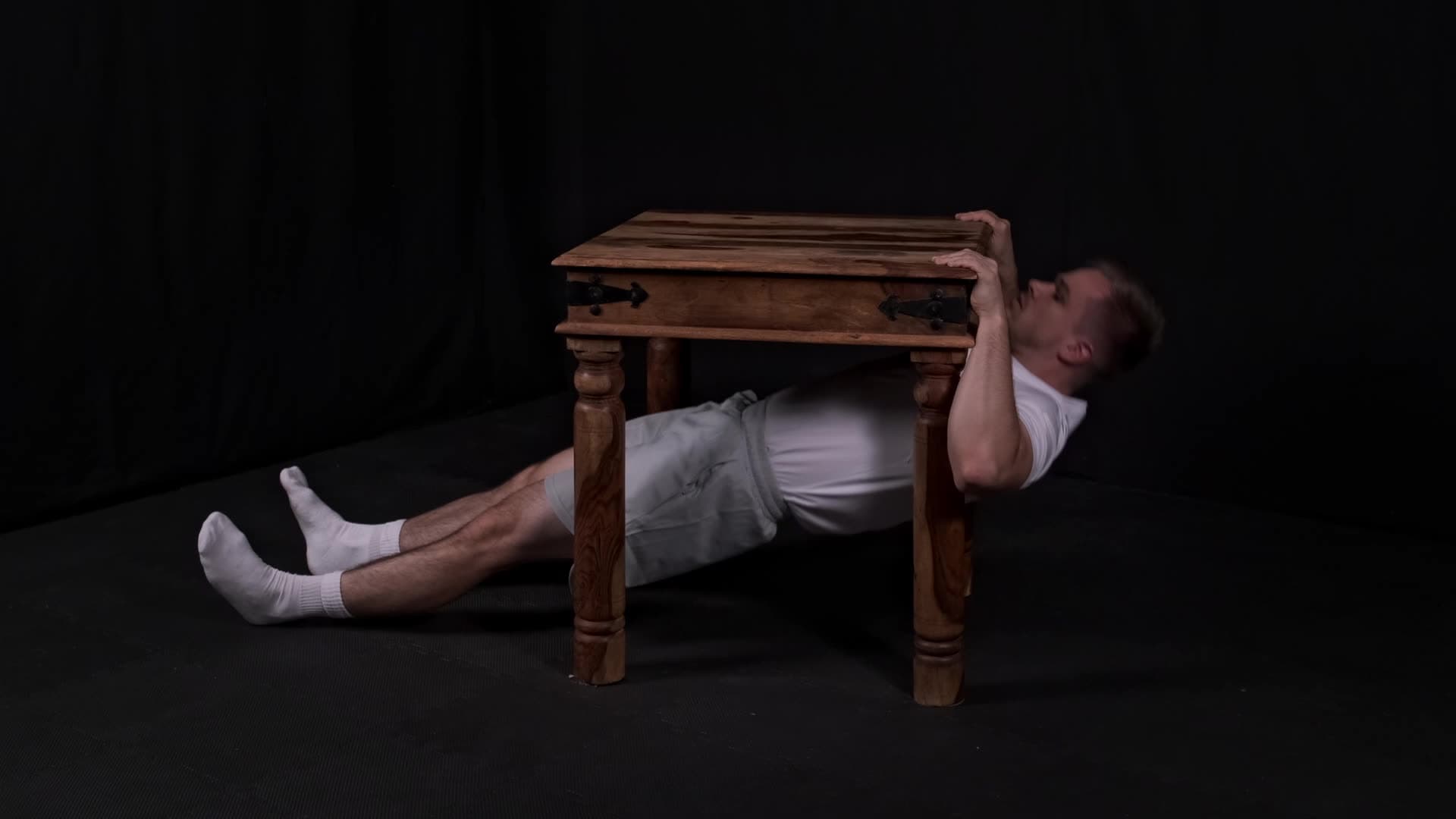
Desk Row Progressions

These progressions use household furniture — always ensure the surface or object is stable and secure before starting. Grip the edge firmly with hands shoulder-width apart and lean back with arms fully extended
3. Core (Hollow body or plank hold)
Core training in calisthenics is about anti-movement — teaching your spine to stay rigid under load, not flexion through crunches. The hollow body hold and the elbow plank train this directly and carry over to every other skill in the system.
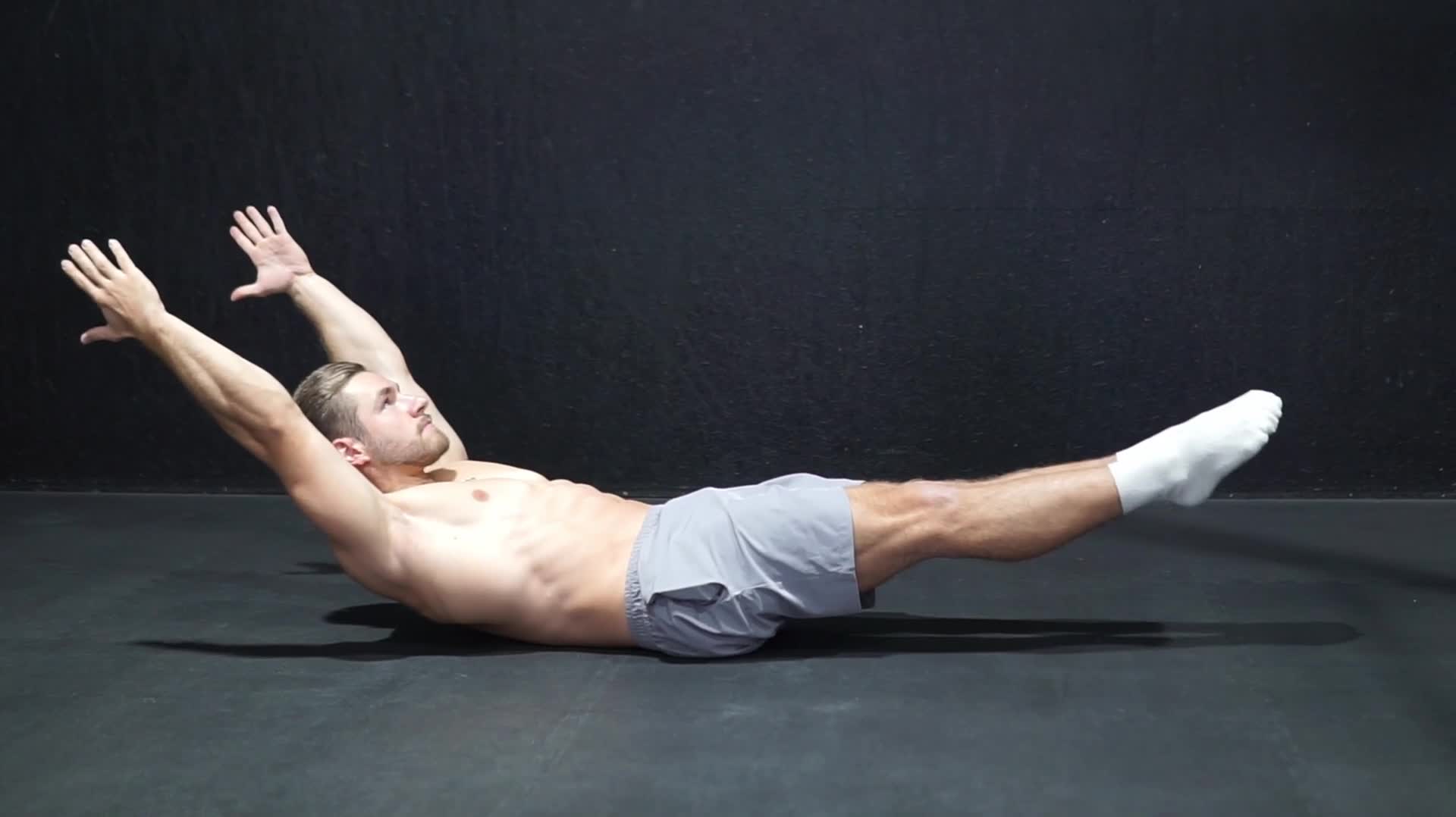
Hollow Body Progressions
Lie on your back with arms extended overhead and legs straight. Press your lower back firmly into the ground — there should be no gap between your back and the floor
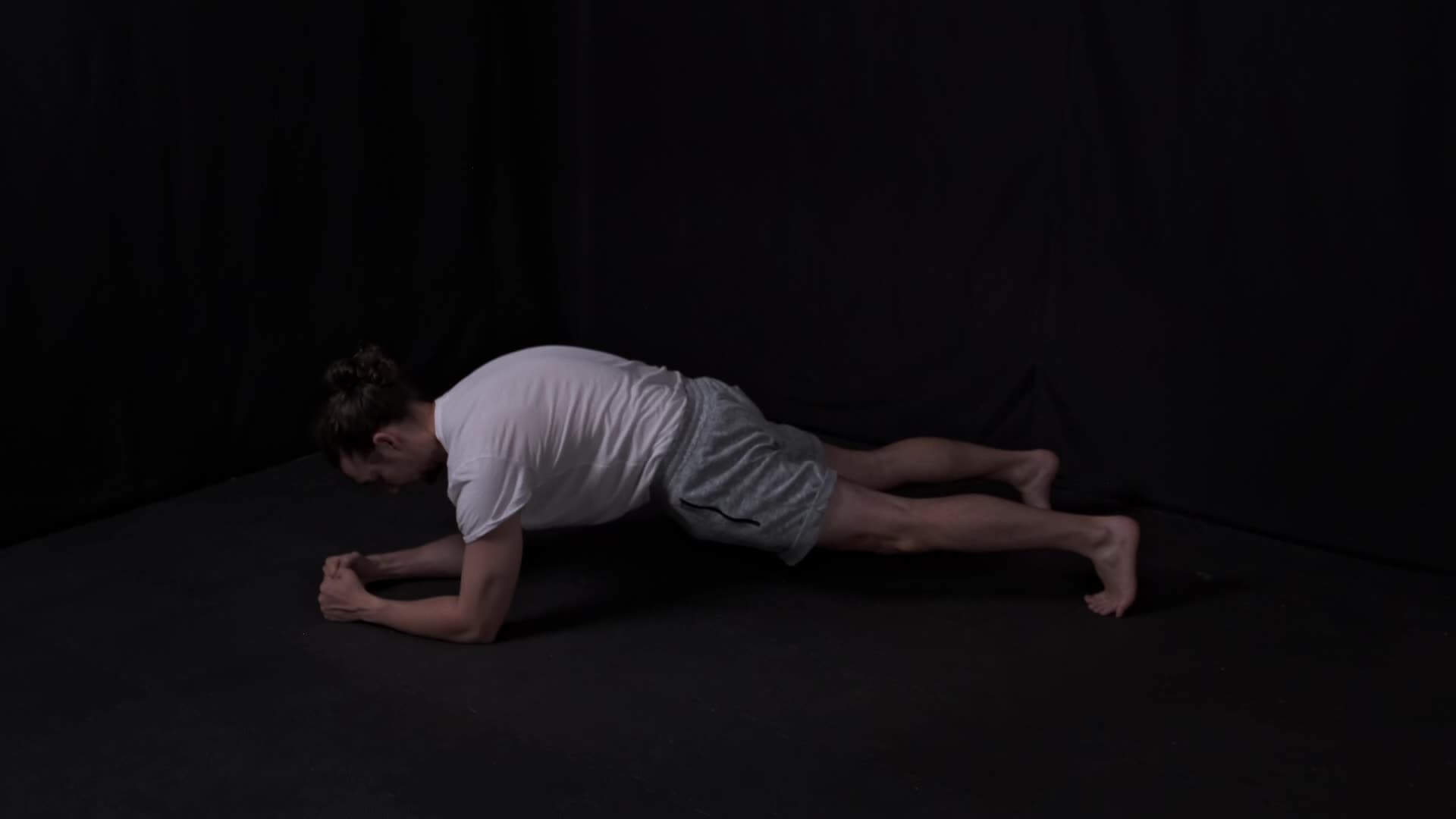
Elbow Plank Progressions
Place elbows directly under or slightly in front of the shoulders. Protract your shoulder blades (push the ground away) and depress your shoulders away from your ears
4. Squat (Squat variations)
Two-leg squats are straightforward and can be loaded progressively by working toward pistol squats (single-leg). If standard squats are easy, add a pause at the bottom or slow the descent — don't rush toward single-leg work before building solid bilateral strength.
These four patterns cover every major muscle group. Any beginner program missing one of them has a structural gap.
How Often Should Beginners Train?
Train 3 days per week on non-consecutive days — Monday, Wednesday, and Friday is the classic template, but any three days with at least one rest day between works.
Here's why this frequency works: muscle protein synthesis (the process driving growth and adaptation) peaks in the 24–48 hours after a training session, then returns to baseline. Training before the adaptation is complete does not accelerate progress — it interrupts it. Rest days are when you get stronger. The training session is just the stimulus.
Three days per week is enough to trigger adaptation consistently while leaving adequate recovery time. Four days becomes appropriate after 8–12 weeks of consistent training, once your body has adapted to the training load and your recovery capacity has improved.
On rest days, light activity helps — walks, mobility work, or the kind of movement that isn't taxing enough to interfere with recovery. Complete inactivity is not necessary.
How to Know When to Progress (The One Rule Beginners Miss)
This is the most important piece of information in this guide — and the one almost no beginner article explains clearly.
Progress to the next variation when you can complete all planned sets with 2 reps still in reserve.
That's the rule. Not "after two weeks." Not "when it feels easy." Not "when you hit 10 reps." When you can finish your sets leaving 2 reps on the table on your hardest set, the exercise is no longer challenging enough to drive adaptation. Move to the next step.
Here's what that looks like in practice:
| Exercise | Progress Trigger | Next Step |
|---|---|---|
| Incline push-ups | 3×10 with 2 reps left | Standard push-ups |
| Standard push-ups | 3×12 with 2 reps left | Decline push-ups |
| Desk rows | 3×12 with 2 reps left | Underhand chin-ups |
| Chin-up negatives | 3×5 slow (5 sec down) | Chin-ups (full) |
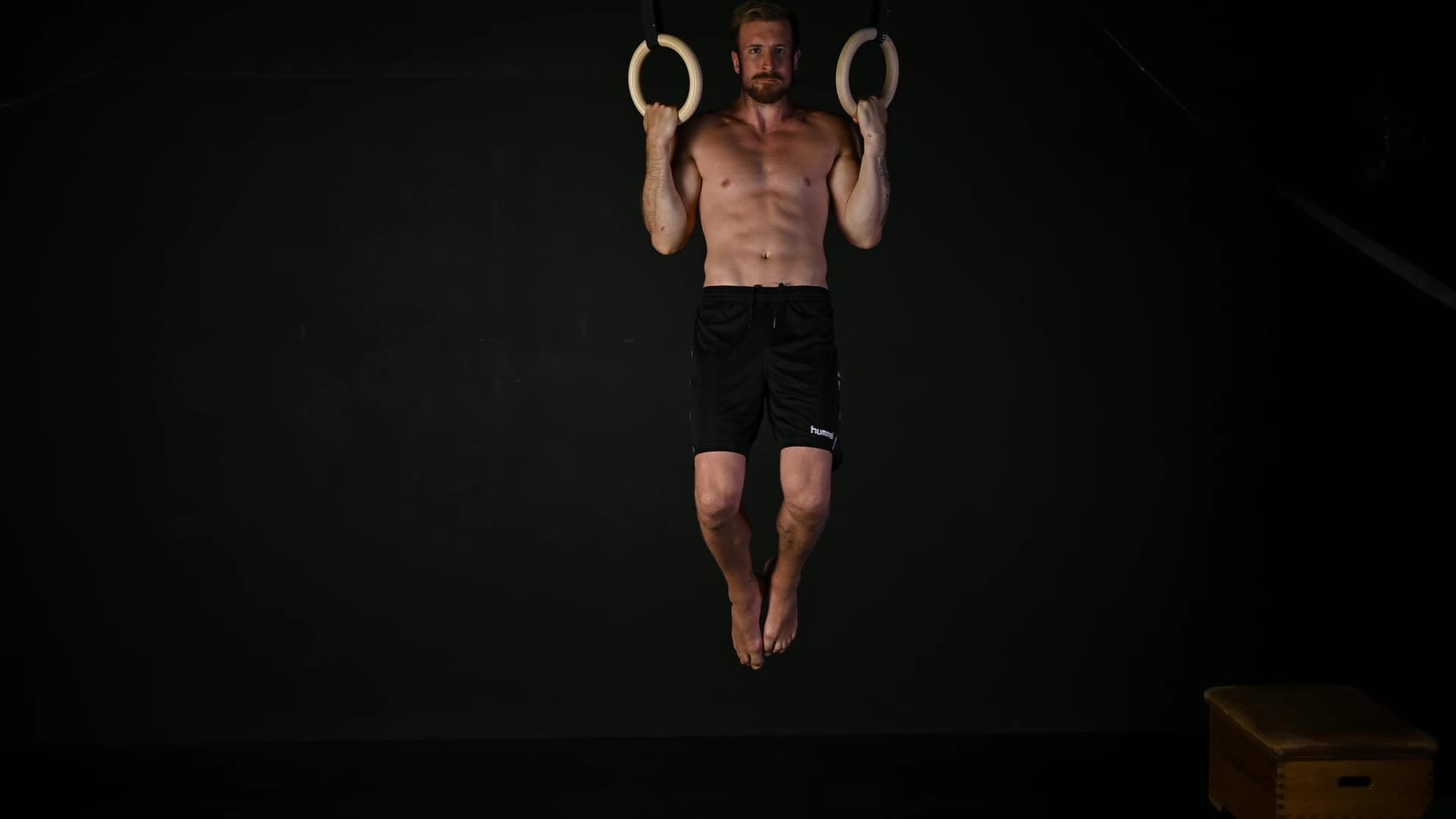
Chin Up Progressions
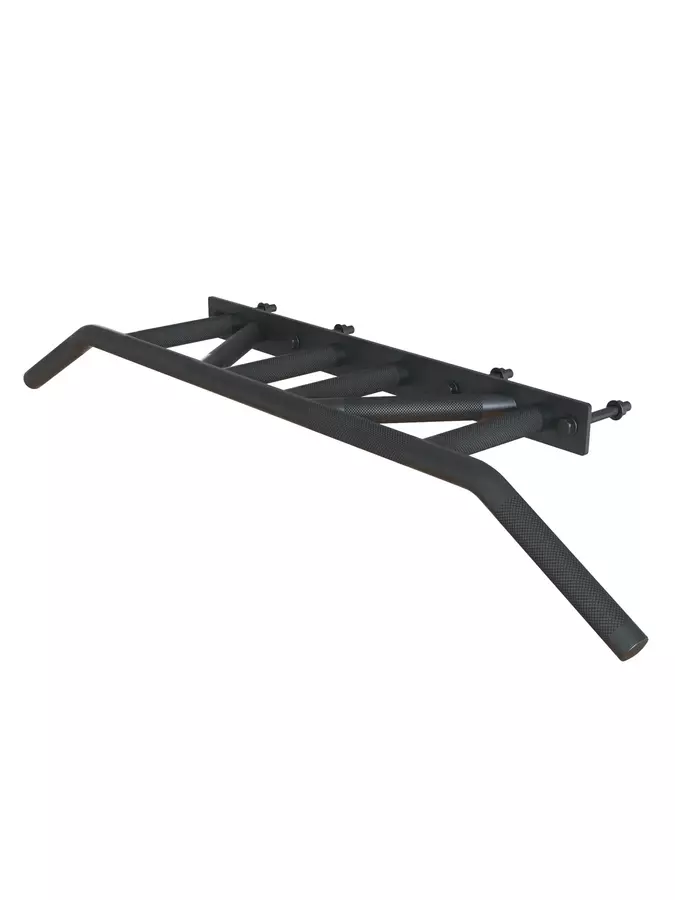
Use a shoulder-width underhand grip (palms facing you) on a bar. Engage your core and keep your body in a straight line
This progression logic — rather than arbitrary timelines — is what drives consistent long-term gains. When you follow a program that applies this rule automatically, you never stagnate.
Equipment You Actually Need (And What to Skip)
One of calisthenics' genuine advantages is that you can start with nothing.
Tier 0 — Zero equipment: Push-ups, hollow body holds, planks, squats, and lunges require nothing but floor space. This is a complete beginner foundation.
Tier 1 — Pull-up bar (~$30): The single most valuable addition. A doorframe pull-up bar unlocks the entire pulling chain — rows, chin-ups, pull-ups, and eventually hanging leg raises and advanced bar skills.
Tier 2 — Resistance bands (~$20–$40): Assist pull-ups and chin-ups when you're not yet strong enough for full reps. Also useful for warming up shoulder structures.
Tier 3 — Parallettes (~$30–$80): Useful for dip depth and handstand work. Not needed in the first 3–4 months of training.
Skip rings, weighted vests, and gymnastics equipment until you've been training consistently for at least 6 months. Buying equipment before building the habit is a classic beginner error.
5 Mistakes That Kill Beginner Progress
1. Skipping regressions out of ego. Sloppy full push-ups are less effective and riskier than clean incline push-ups. Form is the priority — always.
2. No structured progression. Doing the same session every week without progression logic is the fastest path to a plateau. The exercises need to get harder over time, not just more frequent.
3. Training every day. More training is not always better, especially for beginners. Muscles grow during recovery, not during training. Rest is a non-negotiable part of the program.
4. Ignoring pulling movements. Every pushing rep needs a corresponding pulling rep to maintain shoulder balance. Beginners who only train push-ups and dips develop anterior shoulder dominance and end up with chronic shoulder discomfort.
5. Following random YouTube routines. YouTube workouts have no progression logic — they're designed for views, not adaptation. A workout that doesn't tell you when or how to advance cannot produce long-term results. Follow a beginner workout plan built with progression structure, or use an app that manages it for you.
Frequently asked questions
Can a complete beginner start calisthenics?
Yes — every calisthenics exercise has a regression (an easier version). Someone who can't do a single push-up starts with incline push-ups; someone who can't do a pull-up starts with rows. There is no prerequisite fitness level. The only requirement is willingness to follow a structured progression.
How many times a week should a beginner do calisthenics?
Three days per week on non-consecutive days is optimal for beginners. This allows 48 hours of recovery between sessions — the window where muscle adaptation actually happens. Add a fourth day after 8–12 weeks of consistent training.
What is the first exercise beginners should learn?
The push-up (or an incline variation) and the row (using a table or low bar). These two movements cover the push and pull patterns and build the foundational upper-body strength needed for everything that follows. Master these before chasing pull-ups or dips.
How long before I can do my first pull-up?
Most beginners who train consistently 3 times per week reach their first full pull-up within 6–12 weeks, starting from rows and negative pull-ups. The timeline shortens significantly when following a structured progression rather than just jumping at the bar and failing.
Should I follow a program or build my own calisthenics routine?
Follow a program, especially in the first 3–6 months. The value of a program is the progression logic — it tells you what to do next. Building your own routine requires knowing how to structure progressive overload, which is a skill in itself. Get strong first, then customize.
Simple Calisthenics builds your beginner program from your exact starting point — no pull-ups required. Answer a few questions, get a personalized plan, and know exactly what to do every session. Start free today.
Start free trialFAQ
- Can a complete beginner start calisthenics?
- Yes — every calisthenics exercise has a regression (an easier version). Someone who can't do a single push-up starts with incline push-ups; someone who can't do a pull-up starts with rows. There is no prerequisite fitness level. The only requirement is willingness to follow a structured progression.
- How many times a week should a beginner do calisthenics?
- Three days per week on non-consecutive days is optimal for beginners. This allows 48 hours of recovery between sessions — the window where muscle adaptation actually happens. Add a fourth day after 8–12 weeks of consistent training.
- What is the first exercise beginners should learn?
- The push-up (or an incline variation) and the row (using a table or low bar). These two movements cover the push and pull patterns and build the foundational upper-body strength needed for everything that follows. Master these before chasing pull-ups or dips.
- How long before I can do my first pull-up?
- Most beginners who train consistently 3 times per week reach their first full pull-up within 6–12 weeks, starting from rows and negative pull-ups. The timeline shortens significantly when following a structured progression rather than just jumping at the bar and failing.
- Should I follow a program or build my own calisthenics routine?
- Follow a program, especially in the first 3–6 months. The value of a program is the progression logic — it tells you what to do next. Building your own routine requires knowing how to structure progressive overload, which is a skill in itself. Get strong first, then customize.