Why You Should Start Calisthenics in 2026: 9 Real Benefits
The evidence-backed reasons to start calisthenics in 2026 — and a clear, scalable path to begin training at your own level today.
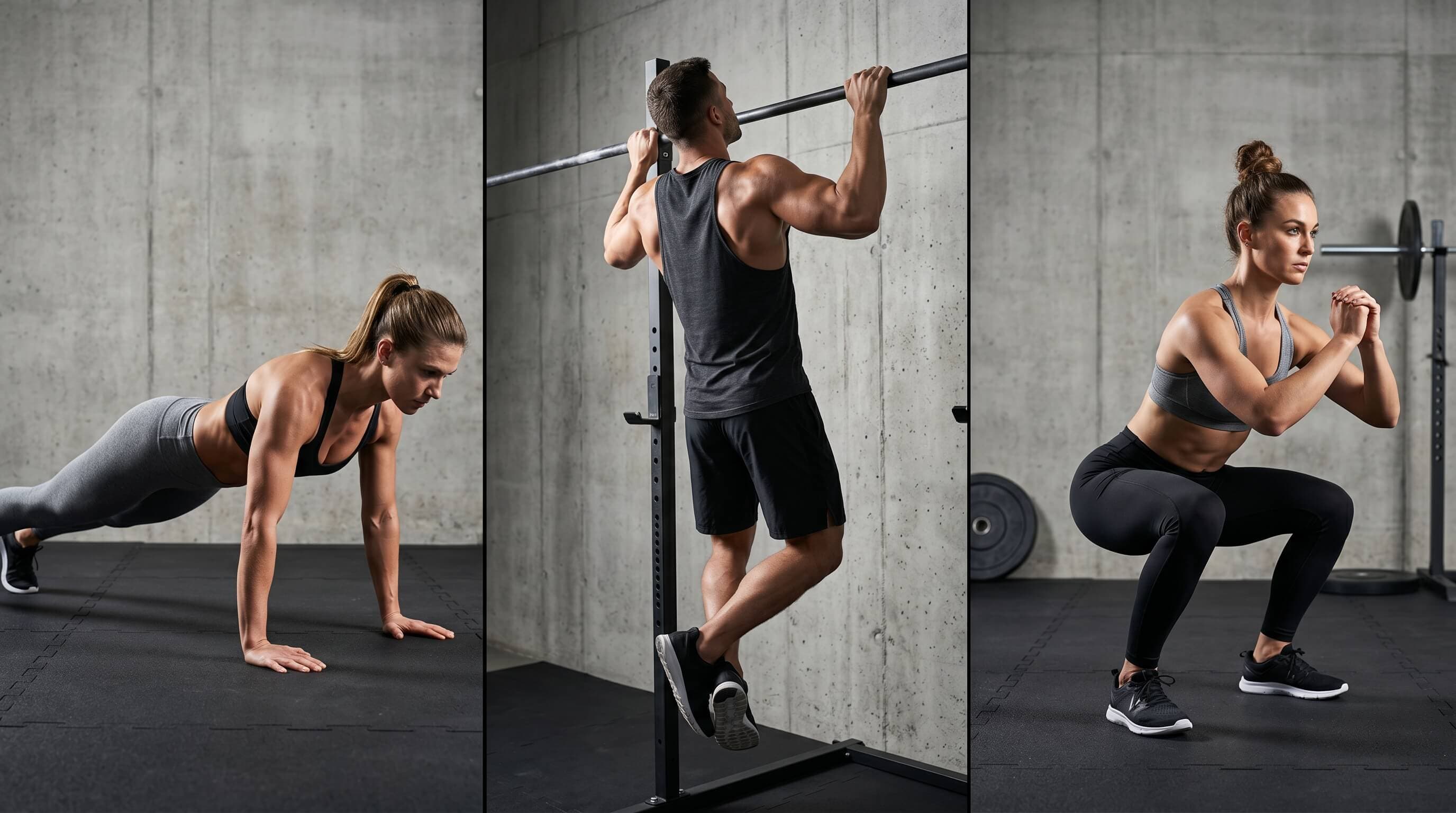
If 2026 is the year you finally get in shape, calisthenics is one of the smartest places to start. It's one of the most effective ways to get strong, mobile, and lean using almost nothing but your own bodyweight — it works for complete beginners and advanced athletes alike, and the science backs it up.
What is calisthenics?
Calisthenics is resistance training that uses your own bodyweight as the load. Instead of barbells and machines, you move through compound patterns — pushing, pulling, squatting, hinging, and bracing your core — that train multiple muscle groups at once.
That compound nature is what makes it so efficient. A single push-up works your chest, shoulders, triceps, and core together, the way your body actually moves in real life. The same applies to pull-ups, dips, squats, and planks: each one is a full coordinated effort rather than an isolated muscle on a machine.
Because the resistance is your own body, you can train almost anywhere — a floor, a bar, a pair of parallel bars — and every movement can be made easier or harder by changing leverage, range of motion, or tempo. That scalability is the heart of calisthenics: the same exercise grows with you from your first week to your hundredth.
9 evidence-based benefits of calisthenics
Calisthenics delivers a wide spread of benefits because compound bodyweight movements train strength, control, and conditioning at the same time. The credible medical sources agree on the core advantages, and here are the nine that matter most.
-
It needs little or no equipment. You can train a full session with nothing but the floor and, ideally, a bar to hang from. Harvard Health describes calisthenics as an effective, low-frills way to stay fit precisely because it removes the equipment barrier. That accessibility is why so many people stick with it long term.
-
It builds functional strength. Bodyweight movements train your body as a connected system, so the strength carries over to real-world tasks — lifting, climbing, carrying, and stabilizing. Cleveland Clinic notes that calisthenics builds genuine functional strength suitable for all levels. You get strong in ways that actually transfer outside the gym.
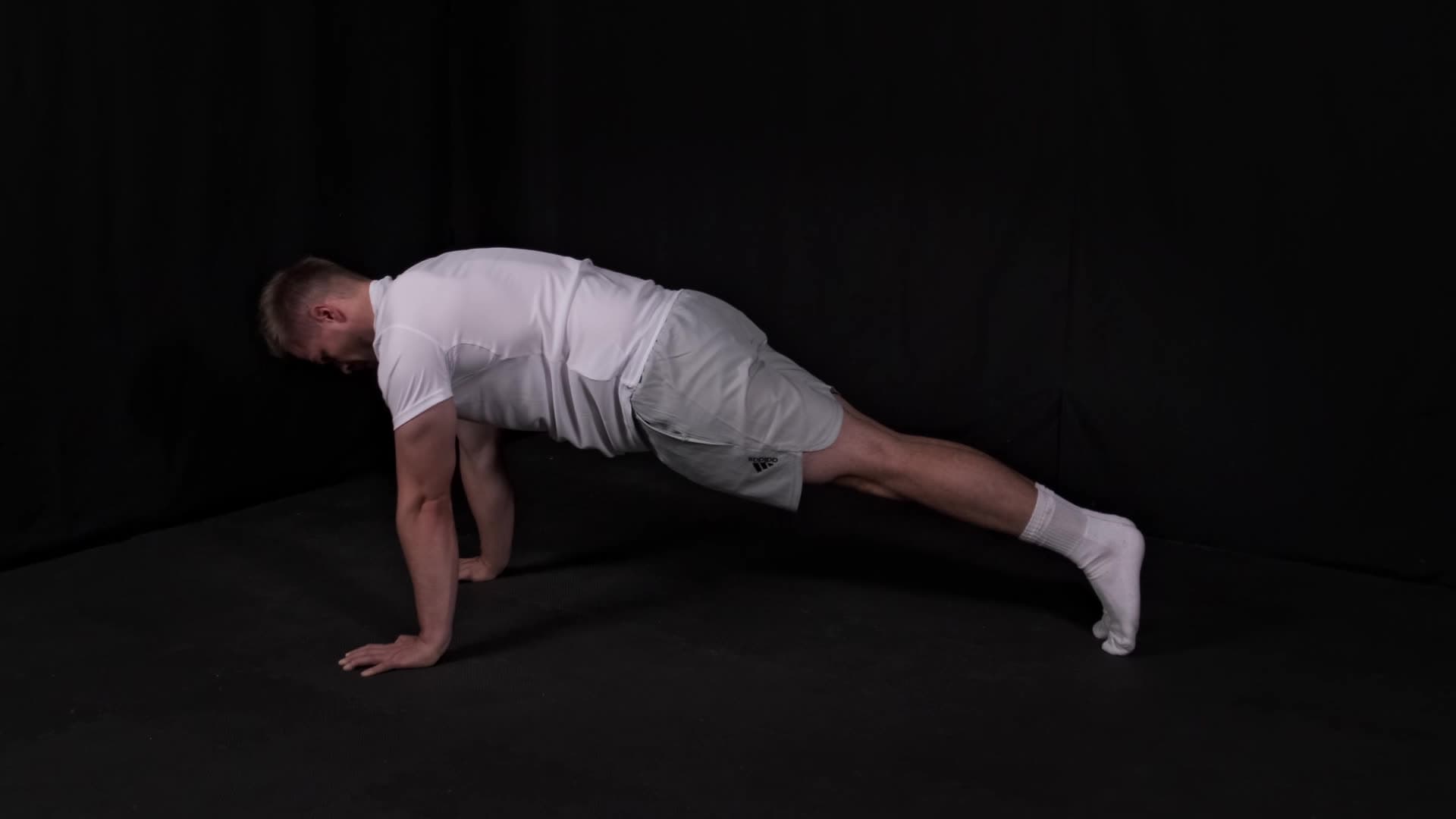
Push Up Progressions
Maintain a straight body line. Avoid the hips sinking down, or raising up too high
→ -
It builds muscle. Progressive bodyweight training stimulates real muscle growth. Research on bodyweight exercise has found that high-rep push-up training can produce strength and muscle adaptations comparable to light bench-press work, as long as you keep the effort high and progress over time. Muscle responds to tension and progression, not specifically to barbells.
-
It supports fat loss. Compound bodyweight circuits keep your heart rate elevated and recruit large amounts of muscle, which burns meaningful energy during and after the session. Combined with the muscle you build, that makes calisthenics a strong tool for improving body composition.
-
It improves mobility, balance, and coordination. Many calisthenics movements demand that you control your body through a full range of motion, which trains flexibility and joint control at the same time as strength. Balance and coordination improve as a direct byproduct of moving your whole body under control.
-
It scales to any level. Every exercise has an easier regression and a harder progression. If you can't do a full push-up, you start on an incline; once full push-ups feel easy, you advance toward harder variations. Nothing is off-limits — you simply meet the movement at your current level.
-
It carries a low injury risk. Because you control your own bodyweight rather than external load, the stress on your joints stays manageable and the movements stay natural. Cleveland Clinic highlights calisthenics as accessible and well-suited to beginners and people returning to exercise, in part because of this lower risk profile.
-
It improves cardiovascular health. Performed in circuits or with short rest, calisthenics raises your heart rate and builds conditioning alongside strength. WebMD points to bodyweight training as a way to improve overall fitness, including cardiovascular health, without specialized equipment.
-
It unlocks impressive skills and keeps you motivated. Calisthenics gives you concrete goals to chase — your first pull-up, a clean dip, eventually a muscle-up or handstand. Those milestones make training feel like progress rather than a chore, and the motivation that comes from learning a real skill is one of the most underrated benefits of all.
Can you build muscle with calisthenics?
Yes — you can absolutely build muscle with calisthenics, and the mechanism is the same one that drives growth with weights: progressive overload. Your muscles grow when you ask them to handle gradually increasing tension, and bodyweight training has plenty of ways to keep increasing that tension.
Research comparing bodyweight push-up training to light bench-press training has found that the two can produce broadly comparable strength and muscle adaptations when effort and progression are matched. The barbell isn't magic — the muscle simply responds to hard, progressive work, whatever the source of resistance.
The key is to keep moving to harder progressions instead of doing endless reps of the same easy exercise. Once a movement feels comfortable, you make it harder by changing leverage, slowing the tempo, reducing assistance, or advancing to a tougher variation.

Pull Up Progressions
Start from a dead hang with arms fully extended — use a shoulder-width overhand (pronated) grip. Initiate by depressing and retracting the shoulder blades (scapular pull) before bending the arms
Pull-ups build your back and biceps, and dips build your chest, shoulders, and triceps — and both have clear progression paths from assisted versions all the way to weighted and advanced variations. Working through those structured progressions is exactly what turns consistent training into visible muscle.
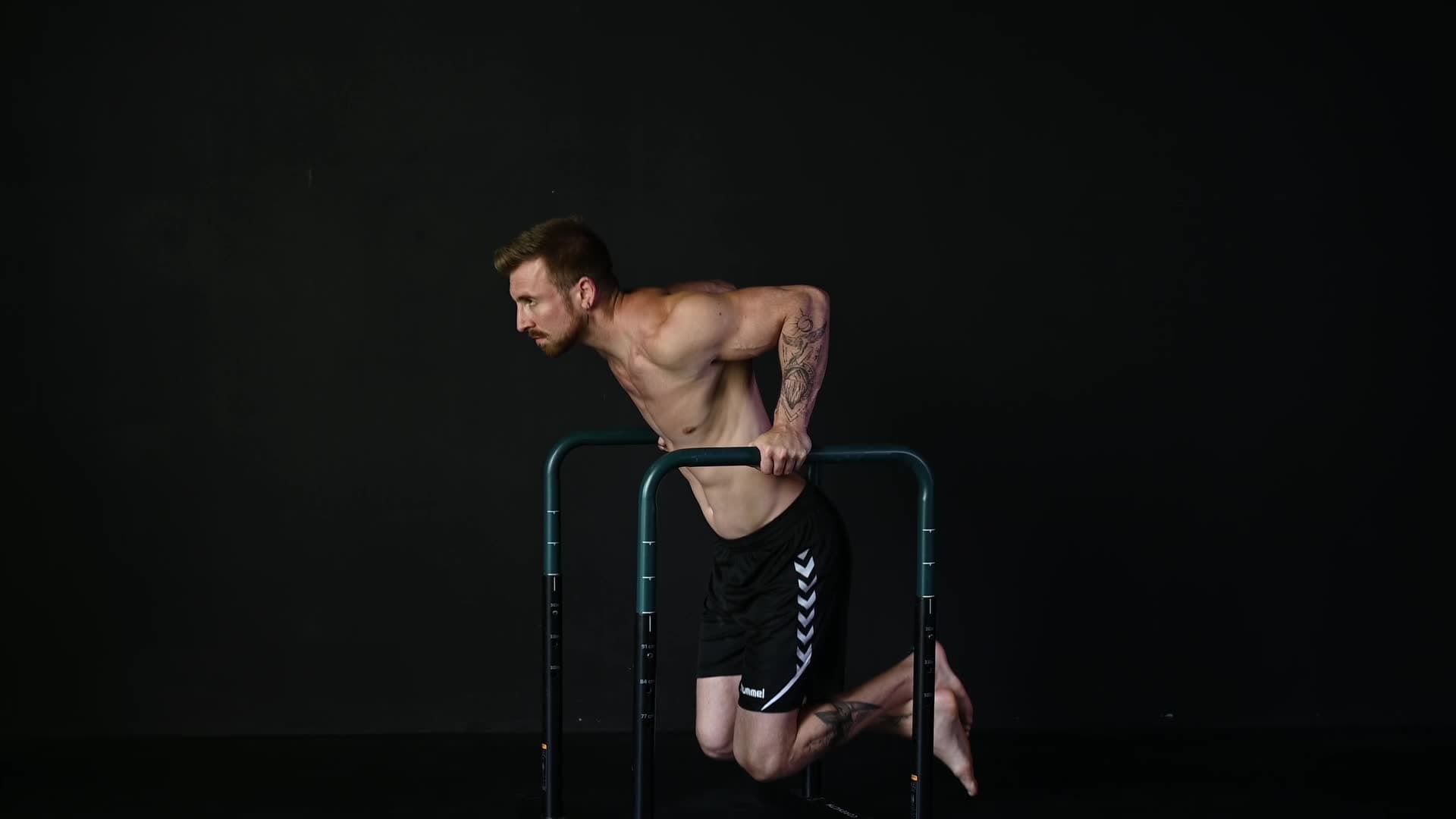
Dip Progressions
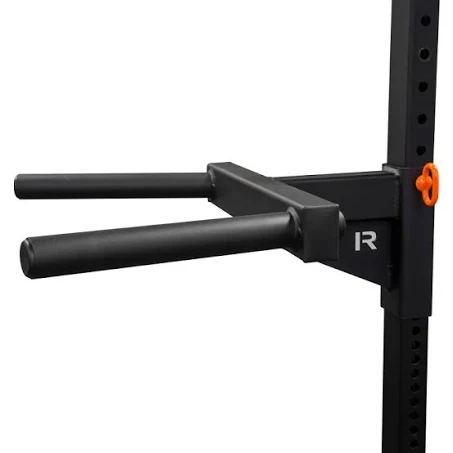
Move slowly with control. Get to 90° elbow angle or deeper, as long as you stay pain free
Calisthenics vs weights — which is better?
Neither calisthenics nor weights is universally better — they have different strengths, and the right choice depends on your goals. Calisthenics wins on functional strength, mobility, accessibility, and joint-friendliness. Weights win on simplicity of loading when your only goal is maximal strength in a single lift.
The honest summary is that both build muscle and strength effectively, and many people end up combining them. But if you're choosing one place to start, calisthenics is the most accessible, lowest-barrier option — you can begin today with no gym membership and no equipment.
| Factor | Calisthenics | Weights |
|---|---|---|
| Functional strength | Excellent — trains whole-body coordination | Good, but often more isolated |
| Adding load for max strength | Harder — relies on leverage and progressions | Easy — just add plates |
| Mobility and control | Excellent | Moderate |
| Accessibility and cost | Very high — minimal equipment | Lower — needs a gym or weights |
| Joint-friendliness | High — you control your own bodyweight | Depends on technique and load |
| Skill development | High — muscle-ups, handstands, levers | Limited |
For pure maximal strength in one lift, weights make adding load trivial. For building an athletic, capable, mobile body with minimal equipment, calisthenics is hard to beat — and combining the two gives you the best of both.
Is calisthenics good for beginners?
Calisthenics is one of the best possible starting points for a beginner. It carries a low injury risk, needs little or no equipment, and every single movement has an easier version, so there's no entry requirement beyond being willing to start. You meet each exercise exactly where you are.
That scalability matters more than anything else for a new trainee. Can't do a push-up yet? You start on an incline or your knees. Can't hold a plank for long? You shorten the hold or raise your hands. The exercise stays the same; only the difficulty changes.
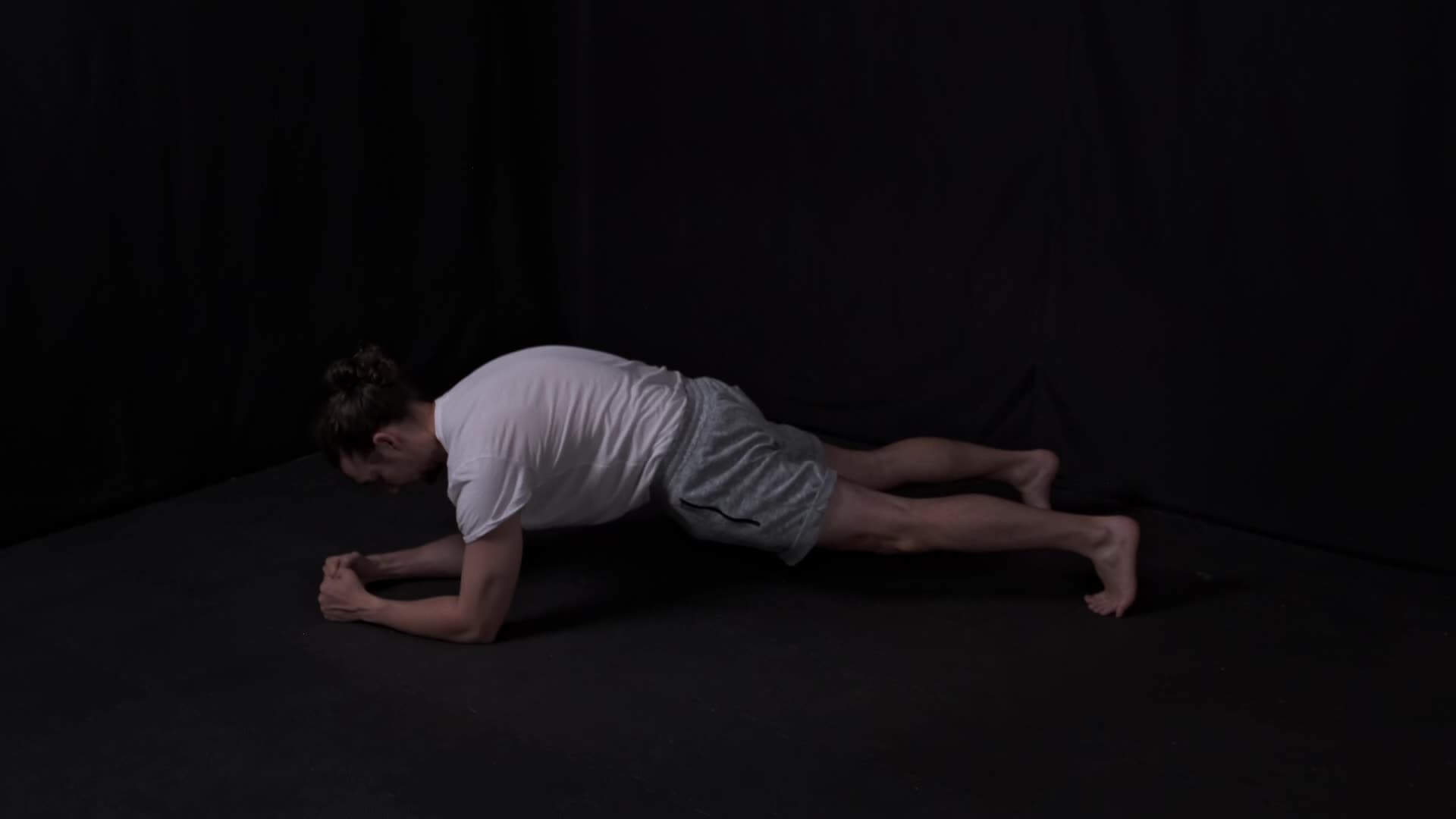
Elbow Plank Progressions
Place elbows directly under or slightly in front of the shoulders. Protract your shoulder blades (push the ground away) and depress your shoulders away from your ears
Core and lower-body staples like the plank and the glute bridge are perfect first movements — they build the bracing strength and hip control that everything else depends on, and they need no equipment at all.
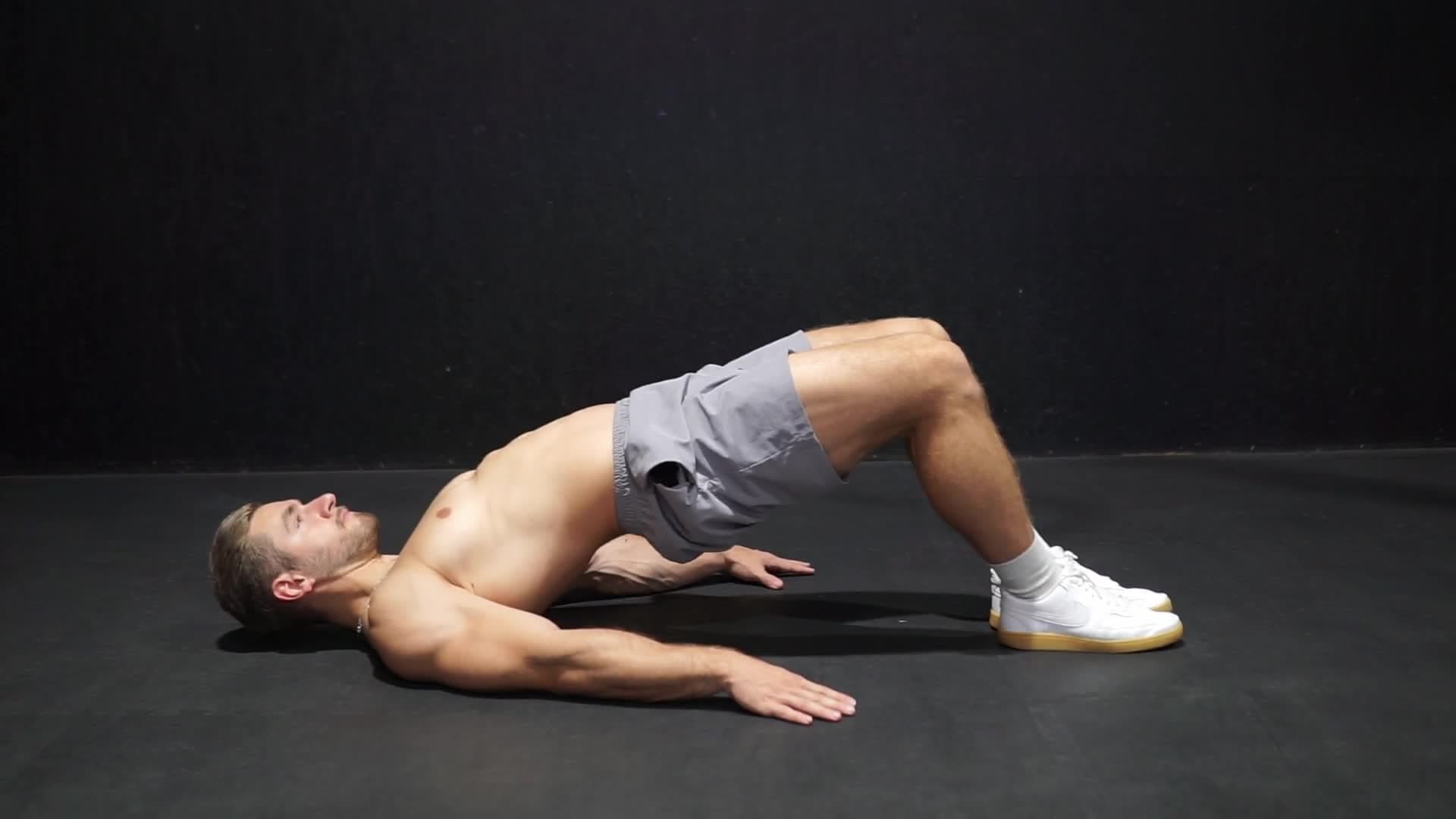
Glute Bridge Progressions
Lie on your back with knees bent and feet flat on the floor, hip-width apart. Place your feet close enough that you can almost touch your heels with your fingertips
Most beginners notice real strength gains within four to six weeks of consistent training. Early progress in calisthenics is fast because your nervous system adapts quickly and there's so much low-hanging fruit — which makes those first weeks genuinely motivating.
How to start calisthenics today
Starting calisthenics is simpler than most people expect — you need a small set of foundational patterns and a bit of consistency, not a perfect plan. Follow these steps to begin the right way.
- Learn the five foundational patterns. Build your training around push (push-up), pull (pull-up or row), squat, hinge (glute bridge or hip hinge), and core (plank). These five cover your whole body and form the base of every program.
- Pick the right progression for your level. Choose the version of each movement you can do with good form for several reps. If a full push-up is too hard, start on an incline; if a pull-up is out of reach, start with rows or assisted variations.
- Train two to three times a week. Two to three full-body sessions on non-consecutive days is plenty for steady beginner progress while leaving room to recover. Consistency beats intensity in the early months.
- Prioritize form over reps. Clean, controlled repetitions build strength faster and keep you injury-free. Slow down, hit a full range of motion, and stop a set before your form breaks down.
- Progress gradually. Once an exercise feels easy, add reps, slow the tempo, or move to a harder progression. That steady increase in difficulty is the engine of long-term results.
- Let a structured plan take over. Once you've got the basics, a beginner calisthenics workout plan removes the guesswork and keeps you progressing. Many people use a calisthenics app to handle the programming, or build your individual program tailored to your goals, equipment, and schedule.
The benefits are real, but they only show up with progression and consistency over months — which is exactly what a structured, adaptive program is built to deliver.
Frequently asked questions
What are the main benefits of calisthenics?
Calisthenics builds functional strength and muscle, improves mobility, balance, and coordination, needs little or no equipment, scales to any level, and carries a low injury risk. Research also links it to better posture, body composition, and cardiovascular health.
Can you build muscle with just calisthenics?
Yes. Bodyweight exercises can build muscle comparably to weights when you train progressively — moving to harder variations as you get stronger. Push-ups, pull-ups, and dips with proper progression drive real hypertrophy over 8–12 weeks.
Is calisthenics better than lifting weights?
Neither is universally better. Calisthenics excels at functional strength, mobility, and accessibility; weights make adding load for pure max strength simpler. For most people, calisthenics is the most accessible, joint-friendly place to start, and the two combine well.
How often should you do calisthenics?
Two to three sessions per week on non-consecutive days is enough for steady progress while allowing recovery. As you adapt, a structured, progressive program keeps you improving without overtraining.
Convinced? Turn it into action — Simple Calisthenics builds an individual program at your level and progresses it for you. Start your free 7-day trial.
Start free trialFAQ
- What are the main benefits of calisthenics?
- Calisthenics builds functional strength and muscle, improves mobility, balance, and coordination, needs little or no equipment, scales to any level, and carries a low injury risk. Research also links it to better posture, body composition, and cardiovascular health.
- Can you build muscle with just calisthenics?
- Yes. Bodyweight exercises can build muscle comparably to weights when you train progressively — moving to harder variations as you get stronger. Push-ups, pull-ups, and dips with proper progression drive real hypertrophy over 8–12 weeks.
- Is calisthenics better than lifting weights?
- Neither is universally better. Calisthenics excels at functional strength, mobility, and accessibility; weights make adding load for pure max strength simpler. For most people, calisthenics is the most accessible, joint-friendly place to start, and the two combine well.
- How often should you do calisthenics?
- Two to three sessions per week on non-consecutive days is enough for steady progress while allowing recovery. As you adapt, a structured, progressive program keeps you improving without overtraining.